A bright smile has long been associated with confidence, health, and approachability. For many people, discoloration develops gradually through everyday habits like drinking coffee, tea, or red wine, as well as natural aging. While store-bought products promise quick results, many individuals eventually turn to teeth whitening performed by dental professionals for a more noticeable and lasting improvement.
Understanding why professional whitening works so effectively begins with a closer look at what causes stains in the first place.
Why Teeth Become Stained Over Time
Tooth discoloration generally falls into two categories: extrinsic and intrinsic stains. Extrinsic stains appear on the outer layer of the tooth (the enamel) and are commonly caused by foods, beverages, and lifestyle habits.
Dark drinks like coffee and tea are frequent culprits, as are berries, tomato-based sauces, and tobacco use.
Intrinsic stains, on the other hand, develop beneath the enamel. These can occur due to aging, certain medications, or long-term exposure to staining substances. As enamel naturally thins over time, the underlying dentin—naturally more yellow in tone—becomes more visible.
Because these stains occur at different depths, removing them often requires more than what standard toothpastes or over-the-counter strips can achieve.
How Professional Whitening Works
Professional teeth whitening treatments use carefully formulated bleaching agents, typically containing hydrogen peroxide or carbamide peroxide. These ingredients break down stain molecules within the enamel and dentin, allowing the natural brightness of the tooth to re-emerge.
What makes professional treatments particularly effective is the concentration and application process. Dental professionals use higher-strength whitening solutions than those available in retail products. At the same time, they take steps to protect surrounding gum tissue and monitor the treatment closely.
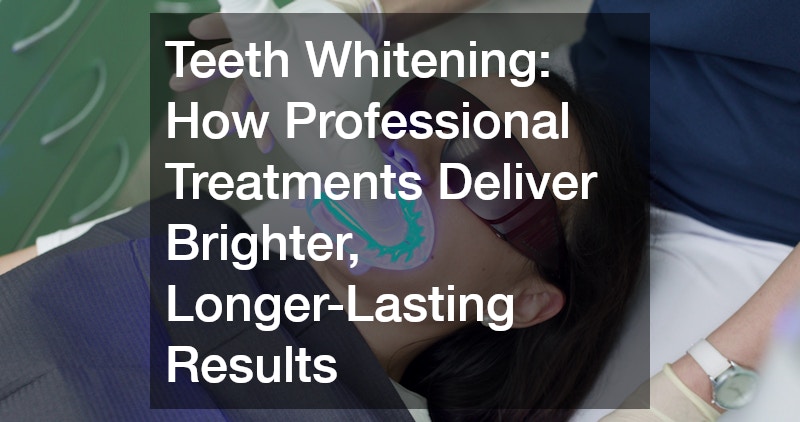
In many cases, specialized lights or activation techniques are used to help the whitening gel penetrate the enamel more efficiently. This allows stains that have accumulated over years to be lifted in a relatively short period of time.
The result is often a noticeably brighter smile after just one session.
Why Professional Treatments Last Longer
One of the most significant differences between professional whitening and at-home kits is the longevity of the results. Because professional formulas reach deeper stains, the whitening effect tends to last longer.
Store-bought products often work only on surface discoloration. While they can provide mild improvements, the results may fade quickly, especially if the underlying stain remains untouched.
Professional treatments, however, address both surface and deeper stains. When paired with good oral hygiene and mindful habits—such as rinsing after dark beverages or using a straw when possible—the effects can last many months or even longer.
Dentists can also recommend maintenance strategies that help preserve the brightness achieved during treatment.
A Personalized Approach to Whitening
Another advantage of professional teeth whitening is the personalized nature of the process. Not every type of stain responds to whitening in the same way, and some teeth are more sensitive than others.
During a dental evaluation, the underlying causes of discoloration can be assessed. From there, the treatment can be adjusted to match an individual’s needs, whether that means modifying the strength of the whitening agent, adjusting the treatment time, or recommending gradual whitening options.
This level of customization helps reduce the likelihood of sensitivity while still producing effective results.
Supporting Overall Oral Health
Whitening treatments also often begin with a professional cleaning. Removing plaque and tartar buildup ensures that the whitening solution can reach the tooth surface evenly. It also allows dental professionals to identify any issues—such as cavities or gum irritation—that should be addressed before whitening begins.
Approaching cosmetic treatments alongside general dental care helps ensure that the final results are both attractive and healthy.
A Brighter Smile That Feels Natural
A whiter smile does not necessarily mean a perfectly uniform shade. In fact, natural-looking results often involve subtle improvements that complement a person’s existing features rather than dramatically altering them.
Professional whitening allows for this kind of balance. By gradually lifting stains and revealing the tooth’s natural color, the process enhances a smile without making it appear artificial.
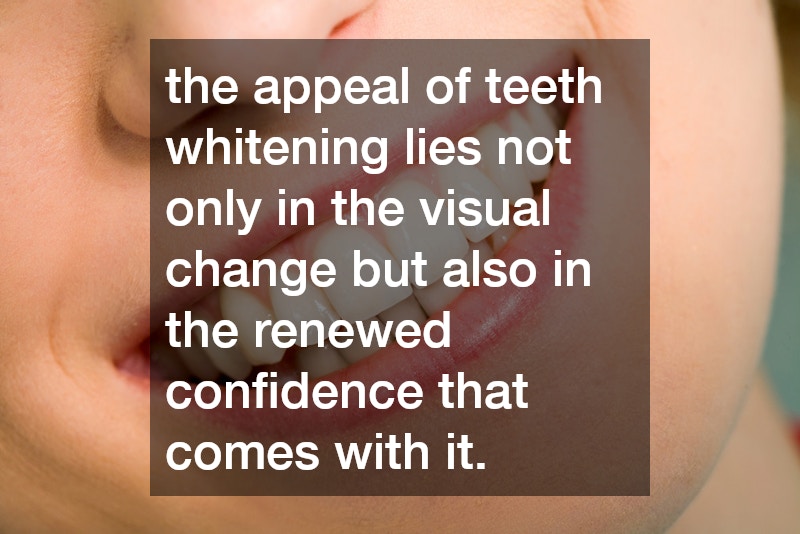
For many people, the appeal of teeth whitening lies not only in the visual change but also in the renewed confidence that comes with it. When stains that once seemed permanent begin to fade, even small improvements can make a meaningful difference.
Over time, maintaining that brightness simply becomes another part of a thoughtful oral care routine—one that supports both appearance and long-term dental health.